Where it started
The backstory
Xavier Roberts began developing soft-sculpture dolls in the late 1970s and called the early handmade creations Little People Originals. They were presented through an adoption process, with individual names and paperwork that made each doll feel like a character rather than a model number.
Coleco brought Cabbage Patch Kids to the mass market in 1983. A variety of head molds, eye colors, hair styles, outfits and computer-assigned names created the impression that every child was finding a particular Kid. Demand became so intense that the 1983 holiday shopping rush entered popular culture.
Vintage identification goes well beyond the signature on the doll. Head-mold numbers, factory body tags, facial paint, hair construction, clothing labels and adoption papers can reveal when and where a Kid was made.
The familiar favorites
Popular figures to know
These are among the figures that defined the line for the widest audience.

First mass-market year
1983 Coleco Cabbage Patch Kids
The 1983 Coleco Kids established the familiar vinyl head, soft cloth body, yarn hair and adoption-paper presentation remembered by a generation.
A box date alone is not enough. Match the head mold, body tag, outfit and paperwork, and watch for replaced clothes or adoption certificates borrowed from another doll.
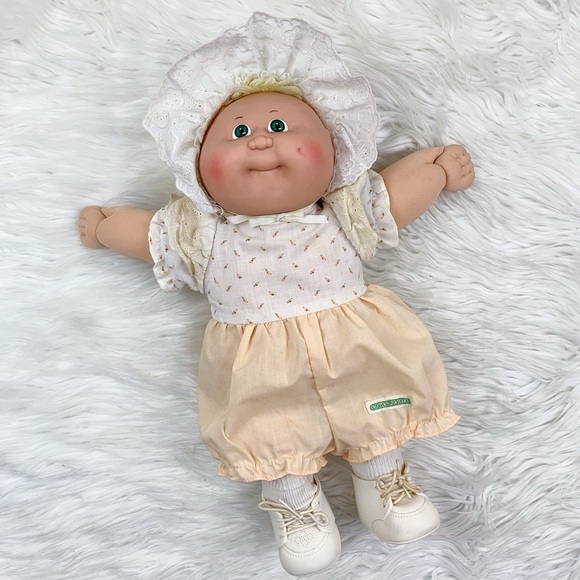
Mid-1980s infant line
Coleco Preemies
Preemies used smaller, infant-like bodies and often came in nursery clothing. Their scale and baby styling made them a distinct collecting branch rather than simply smaller standard Kids.
Pacifiers, diapers, booties and original nursery outfits disappear easily. Facial condition and intact yarn or tufted hair remain important.
Beyond the obvious
Uncommon figures worth recognizing
Uncommon does not automatically mean priceless. Distribution, completeness, condition, authenticity and current collector demand all matter.

Handmade pre-Coleco era
Little People Originals
These hand-stitched soft sculptures predate the mass-market Cabbage Patch Kids and were adopted through Roberts’ original concept. Individual construction means comparisons require specialist knowledge.
Provenance matters. Signatures, adoption documents and construction details should be evaluated together; a familiar face shape alone is not proof.

Licensed 1980s regional production
International factory Kids
Companies such as Jesmar, Tsukuda, Lili Ledy and Tri-ang Pedigree produced licensed Kids for different markets, creating body, hair, paint and label variations unfamiliar to many U.S. collectors.
Different does not mean counterfeit. Learn the correct factory tags and regional traits before judging authenticity or rarity.
Did you know?
Fun facts hiding in the toy box
The adoption-certificate concept was not invented for the 1983 toy craze; it grew from the earlier Little People Originals adoption experience.
Collectors use numbered head molds to classify faces that casual observers may assume are identical.
Body tags can identify factories and production details, while the color of Xavier Roberts’ stamped signature is another clue collectors compare by era.
The randomized names and birth certificates were a powerful form of pre-digital personalization: two visually similar Kids could still arrive with different identities.
Keep exploring
See more: trusted toy-line references
Continue with these focused histories and identification archives. Each link goes to a source with substantially more information about this specific toy line.