
Where it started
The backstory
Hasbro relaunched G.I. Joe in 1982 as A Real American Hero, replacing the older 12-inch format with 3¾-inch figures sized to work with an expanding fleet of vehicles and playsets. The scale made ambitious hardware possible, from motorcycles and jeeps to aircraft carriers.
Larry Hama wrote the character file cards and much of the Marvel comic, giving even minor figures specific skills and personalities. Those clipped card-back biographies became part of the collecting experience and helped children treat the line as a roster rather than a pile of anonymous soldiers.
Construction changed early. The original straight-arm figures received swivel-arm battle grip in 1983, while the internal O-ring and screw assembly allowed a wide range of movement—and created recognizable repair issues decades later.
The familiar favorites
Popular figures to know
These are among the figures that defined the line for the widest audience.

1985 commando
Snake Eyes version 2
The second Snake Eyes added the now-iconic visor, a wolf companion named Timber and a more detailed loadout. It helped cement the silent commando’s place at the center of G.I. Joe collecting.
Timber, the sword and the small backpack are essential completeness checks. Broken thumbs, waist cracks and a loose O-ring are common vintage problems.
1984 Cobra ninja
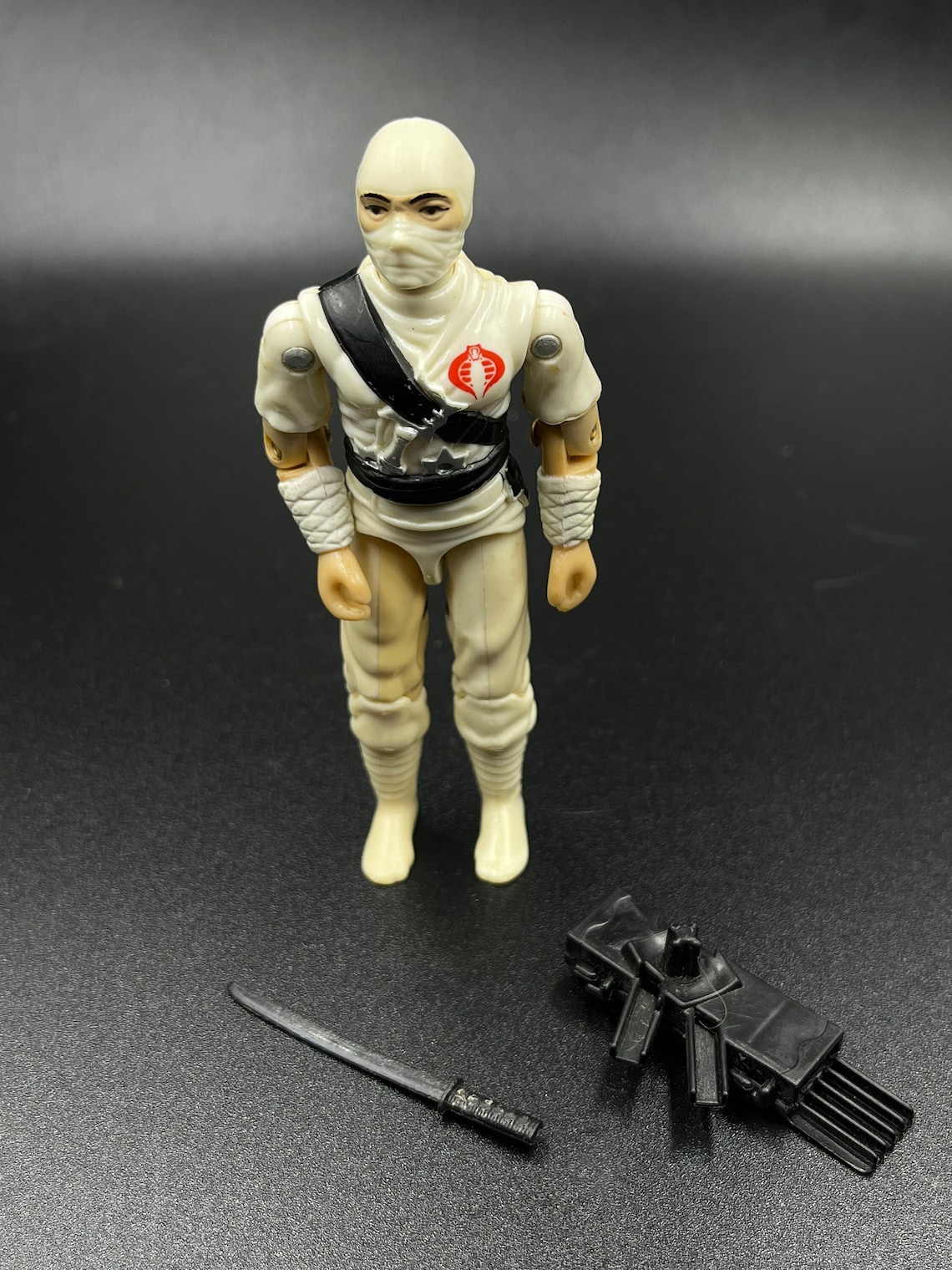
Storm Shadow
The white-clad ninja introduced a striking contrast to the military palette and connected directly to Snake Eyes through the Arashikage clan story.
White plastic can discolor, and the bow, swords and backpack are frequently mismatched with later versions. Check the arm symbol and date markings carefully.
Beyond the obvious
Uncommon figures worth recognizing
Uncommon does not automatically mean priceless. Distribution, completeness, condition, authenticity and current collector demand all matter.

1987 promotional mail-away
Starduster
Starduster was assembled from existing figure parts and distributed through promotional offers instead of a normal carded retail release. Multiple production versions complicate identification.
Because the figure is a parts combination, convincing customs are easy to make. Version-specific paint, waist and accessory details should be verified against a specialist archive.

1987 personalized mail-away
Steel Brigade
Children could order a Steel Brigade figure and create a personalized code name and specialty for its file card, effectively inserting themselves into the G.I. Joe team.
Several vintage body combinations exist. The personalized file card can be more historically interesting than a loose figure alone, but uncommon does not automatically mean pristine or authentic.
Did you know?
Fun facts hiding in the toy box
The 1982 figures had straight arms; the 1983 “swivel-arm battle grip” update added biceps rotation and changed how figures could hold rifles and vehicle controls.
The rubber O-ring inside most vintage figures is replaceable. A loose waist may indicate an inexpensive repair—not necessarily permanent damage.
The U.S.S. Flagg aircraft-carrier playset measured roughly 7½ feet long, turning the small figure scale into one of the largest mass-market playsets of its era.
Steel Brigade’s personalized paperwork made the owner part of the fiction, an unusually direct form of customization years before digital avatars became common.
Keep exploring
See more: trusted toy-line references
Continue with these focused histories and identification archives. Each link goes to a source with substantially more information about this specific toy line.