Where it started
The backstory
Mattel launched Masters of the Universe in 1982 with chunky 5½-inch figures, dramatic card art and a mix of fantasy, science fiction and barbarian adventure. The scale kept production efficient: many figures shared torsos, legs and action mechanisms while distinctive heads, armor and weapons made each character feel new.
Early minicomics packaged with the figures presented a rougher world than the later Filmation cartoon. He-Man could be portrayed as a wandering barbarian rather than Prince Adam, and the mythology was still being assembled. The cartoon standardized the story, but the toys continued to introduce characters and concepts of their own.
The line’s shared parts are not a flaw; they are a key to identifying it. Collectors can learn to recognize common body molds, action features, armor styles and accessory colors, then spot when a figure has been repaired with mismatched parts.
The familiar favorites
Popular figures to know
These are among the figures that defined the line for the widest audience.
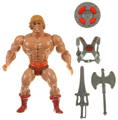
1982 original assortment
He-Man
The heroic centerpiece used a spring-loaded waist that delivered a “power punch.” His simple harness, sword, axe and shield created a silhouette that remained recognizable through decades of redesigns.
Loose examples often have weak waist action, paint wear on the hair and boots, or a cracked leg band. The correct weapons and armor add substantially to completeness.
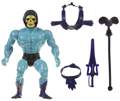
1982 original assortment
Skeletor
Skeletor paired the same basic power-punch body with a vivid skull face, purple armor and a ram-headed Havoc Staff. The economical reuse of parts produced one of the decade’s most memorable villains.
Check that the face paint has not rubbed away and that the purple armor is not split at the straps. His sword was designed to combine with He-Man’s sword in the earliest mythology.
Beyond the obvious
Uncommon figures worth recognizing
Uncommon does not automatically mean priceless. Distribution, completeness, condition, authenticity and current collector demand all matter.
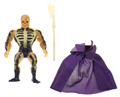
1987 final-wave figure
Scare Glow
A glow-in-the-dark skeletal warrior wrapped in a removable cape, Scare Glow arrived near the end of the original U.S. line. His card described him as the “evil ghost of Skeletor,” a phrase that inspired years of fan debate.
The fragile cape, staff and surviving glow all affect desirability. Reproduction accessories are common, so compare color, texture and molding details.

1988 European release
Laser Power He-Man
This electronic He-Man used a light-up sword and redesigned costume. Limited European distribution kept him out of most American toy aisles and made the original version unfamiliar even to many longtime fans.
Battery corrosion and incomplete electronics can matter as much as cosmetic wear. Rarity alone does not guarantee a good purchase—working condition and original parts must be verified.
Did you know?
Fun facts hiding in the toy box
Battle Cat began with a tiger mold originally associated with Mattel’s Big Jim line; green plastic, orange stripes and removable armor transformed it into He-Man’s mount.
The earliest minicomics did not use the fully developed Prince Adam origin familiar from television. The toy line’s story changed as the franchise grew.
Many weapons were intentionally reused in different colors. Accessory color is therefore an identification clue, not merely a cosmetic variation.
Castle Grayskull was both a playset and a display case for the line’s visual language, combining a skull fortress with a trapdoor, elevator, weapons rack and carry handle.
Keep exploring
See more: trusted toy-line references
Continue with these focused histories and identification archives. Each link goes to a source with substantially more information about this specific toy line.