Where it started
The backstory
Transformers launched in the United States in 1984 through a partnership between Hasbro and Takara. Many early toys came from Takara’s Diaclone and Micro Change lines, where vehicles, household objects and robots had different fictional contexts. New names, faction symbols, character biographies and Marvel storytelling made them part of one universe.
The phrase “Generation 1” was applied later, after Generation 2 needed a name for what came before it. Packaging originally called the toys simply The Transformers. That retroactive label now covers the 1984–1990 American range and related fiction.
G1 collecting demands careful identification because small accessories, rub signs, sticker sheets and production variations can change both completeness and authenticity. A familiar robot may also exist in earlier Japanese colors or later reissues that look convincingly vintage.
The familiar favorites
Popular figures to know
These are among the figures that defined the line for the widest audience.

1984 Autobot commander
Optimus Prime
The cab transformed into Optimus while the trailer opened into a combat deck with Roller. The toy’s Diaclone roots explain the small cockpit spaces and other details designed for miniature pilots.
Roller, hose, nozzle, missiles and fists are commonly missing. Trailer sticker condition and unbroken tabs deserve close inspection.
1984 Decepticon communications officer
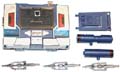
Soundwave
Soundwave transformed into a microcassette recorder and stored smaller cassette characters inside his chest. The play pattern made his supporting cast feel like equipment and characters at the same time.
Check the cassette-door mechanism, battery-cover weapons and chrome wear. A stiff door should never be forced; broken internal latches are a familiar problem.
Beyond the obvious
Uncommon figures worth recognizing
Uncommon does not automatically mean priceless. Distribution, completeness, condition, authenticity and current collector demand all matter.
1986 mail-away set
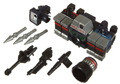
Reflector
The cartoon’s camera-shaped Decepticon was sold as three robots—Viewfinder, Spectro and Spyglass—that combined into one camera. In the United States, children generally had to order the set through the mail.
The set includes numerous small camera parts that are often missing. Reissues and reproductions make precise comparison essential.

1987 Headmaster city
Fortress Maximus
At roughly two feet tall, Fortress Maximus transformed from robot to city and battle station. Its layered Headmaster system included Cerebros and the smaller Spike figure.
Large size does not make a complete example easy to assemble. Spike, ramps, radar pieces, weapons and other removable parts can cost more to replace than expected.
Did you know?
Fun facts hiding in the toy box
“Generation 1” was not printed as the line’s original name in 1984. Collectors adopted it after Transformers: Generation 2 launched in the 1990s.
Jetfire’s vintage toy came from Bandai’s Macross Valkyrie design, helping explain why his animated appearance looks substantially different from the figure.
Heat-sensitive rub signs were added as an interactive way to reveal whether a robot was an Autobot or Decepticon—and also helped distinguish Transformers from imitators.
Some U.S. characters, including Reflector, were promoted through mail-away offers rather than normal retail shelves, creating unusual packaging and completeness challenges.
Keep exploring
See more: trusted toy-line references
Continue with these focused histories and identification archives. Each link goes to a source with substantially more information about this specific toy line.