Where it started
The backstory
Designer Chris Wiggs built the first concept for his daughter in 1983 by placing a miniature dollhouse inside a powder compact. Bluebird Toys licensed the idea and launched commercial Polly Pocket sets in 1989, using brightly colored clamshell cases filled with molded rooms, shops, gardens and holiday scenes.
The original figures were tiny, rigid and designed to stand in small holes around each playset. Bluebird expanded rapidly through the 1990s with wearable lockets, larger worlds and licensed themes. Mattel acquired Bluebird in 1998 and later redesigned Polly at a larger scale, creating a clear divide between original Bluebird compacts and later versions.
For vintage sets, identification starts on the base. Molded Bluebird marks, copyright dates, compact shape and interior colors can separate similar releases. Completeness requires matching the exact dolls and loose pieces; a tiny figure from the correct year may still belong to an entirely different compact.
The familiar favorites
Popular figures to know
These are among the figures that defined the line for the widest audience.
1989 first-year compact
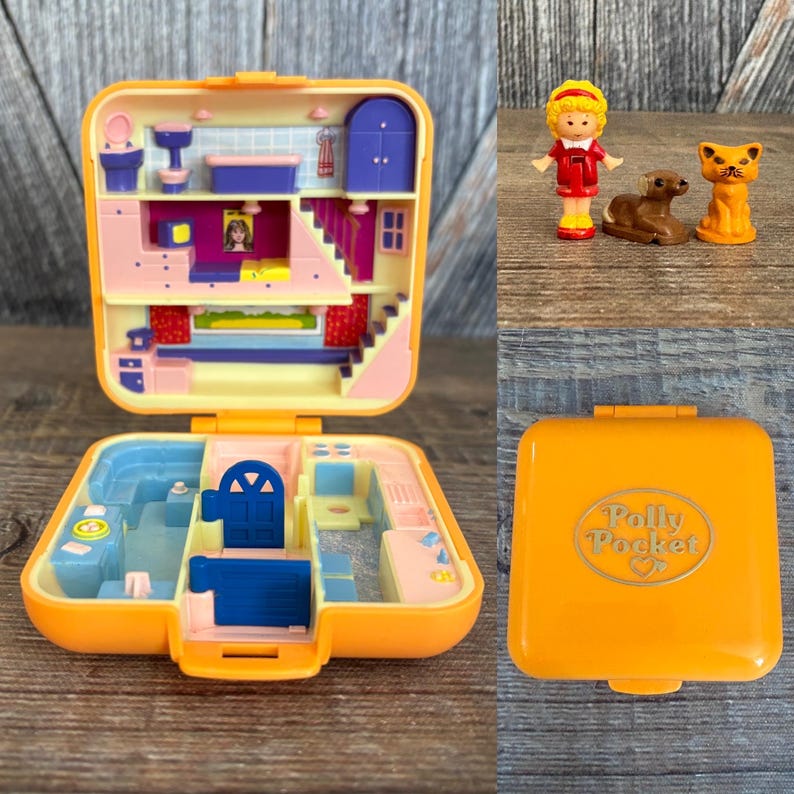
Polly’s Town House
The square compact opened into a multi-level home packed with tiny domestic details. Its approachable house theme captured the central Polly Pocket idea: a complete play environment that snapped shut in one hand.
Color variations exist, and the original Polly and animal companions are often separated. Match the interior palette and molded copyright information before completing a set.
1989 first-year compact
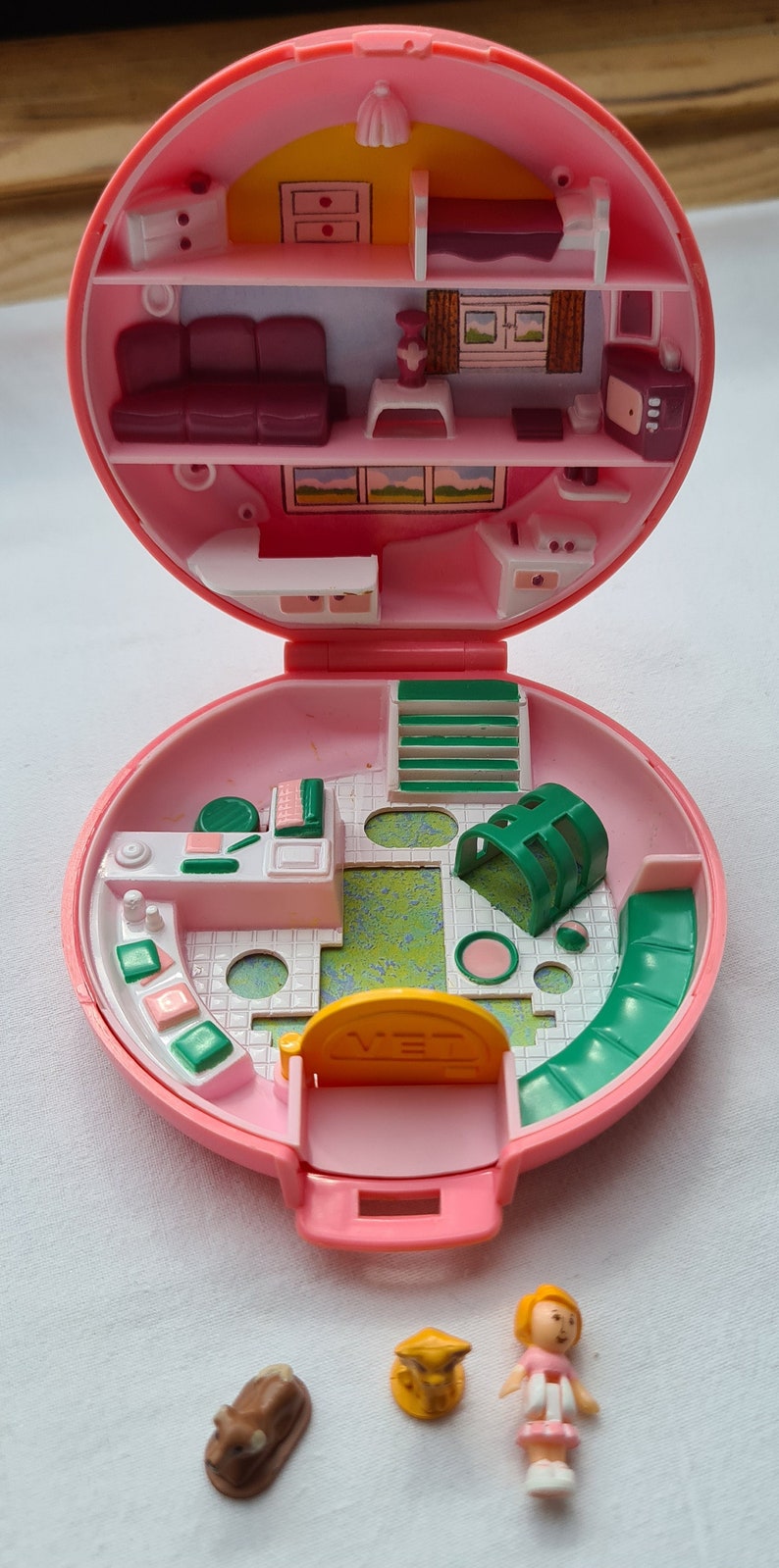
Button’s Animal Hospital
A pink compact opened into a miniature veterinary clinic and home for Button and her animal patients. The pet theme and recognizable VET sign made it one of the most memorable early sets.
Button and the tiny animals are the easiest pieces to lose. Confirm that the figures match the compact rather than relying on any group of same-scale pets.
Beyond the obvious
Uncommon figures worth recognizing
Uncommon does not automatically mean priceless. Distribution, completeness, condition, authenticity and current collector demand all matter.
1989 first-year compact
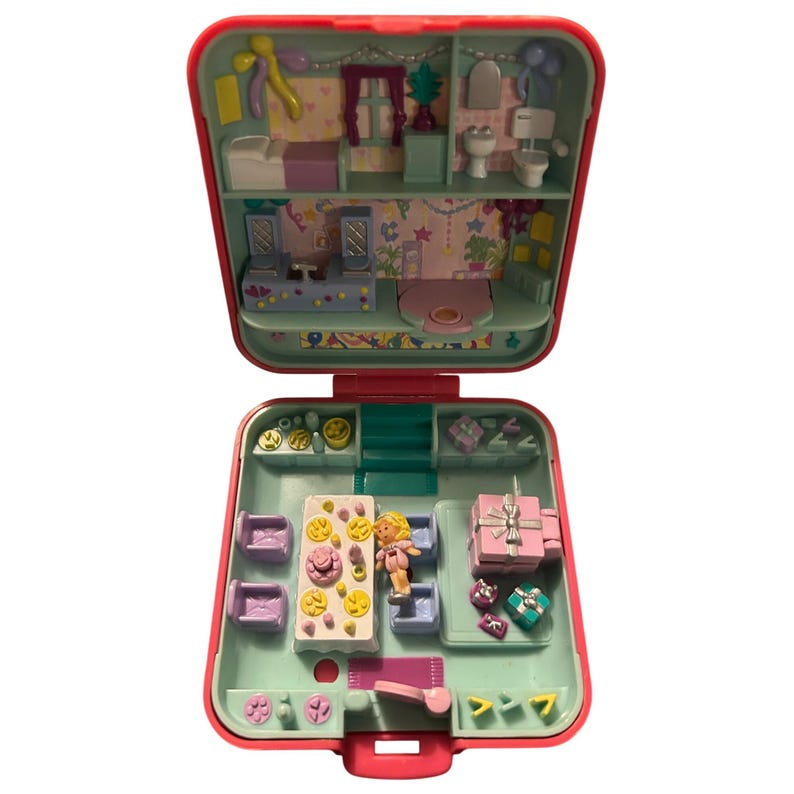
Partytime Surprise
This bright square compact opened into a birthday-party home filled with tiny presents and celebration details. Its first-year status and small loose pieces make complete examples especially sought after.
Inspect every gift, figure and movable detail against a set-specific reference. A clean compact without its tiny original pieces should not be priced as complete.
1989 first-year compact
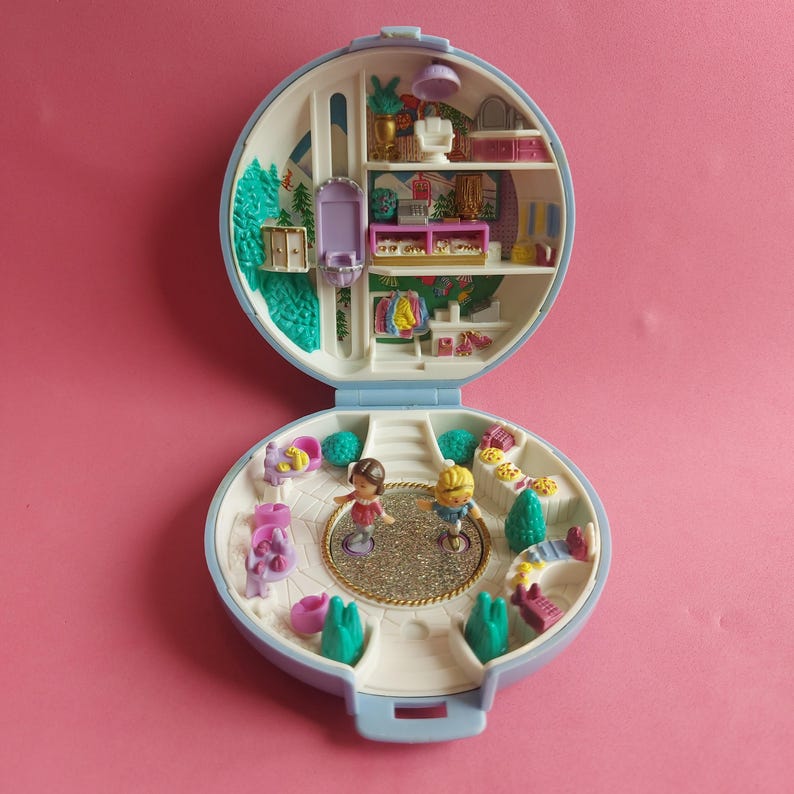
Skating Party
The round blue compact paired a glittering skating rink with miniature shops and an elevator. Turning a molded tree sent the skaters around the rink, adding a memorable mechanical feature.
Check that the rink rotates, the elevator holds position and both original skaters are present. Silver logos and glittered surfaces can show heavy play wear.
Did you know?
Fun facts hiding in the toy box
Chris Wiggs created the original concept inside a powder compact for his daughter before Bluebird developed it for retail.
Bluebird’s first commercial Polly Pocket sets appeared in 1989, making first-year compacts a distinct collecting category.
Original Bluebird dolls are tiny, rigid figures; the larger dolls with changeable rubber clothing belong to Mattel’s redesigned era.
Some early sets came in more than one shell or interior color, so a copyright year alone does not identify every variation.
Keep exploring
See more: trusted toy-line references
Continue with these focused histories and identification archives. Each link goes to a source with substantially more information about this specific toy line.